

Call to Action
Fill out the form to contact us, We promise to respond to you quickly.
Company Display:Fire Drill

Fire Extinguisher

Demonstration

Hands-on Operation

Practical Training

On-site Practice

Return to Formation
How Does an Automatic Cartoning Machine Work? A Complete Guide to the Cartoning Process
Aug 11, 2026
How Does an Automatic Cartoning Machine Work? A Complete Guide to the Cartoning Process
In modern manufacturing, automatic cartoning machines play an important role in improving packaging efficiency and reducing manual labor. They are widely used in industries such as pharmaceuticals, cosmetics, food, healthcare, and daily chemical products.
But how does an automatic cartoning machine work? Understanding the working process can help manufacturers choose the right packaging equipment and improve their production efficiency.


What Is an Automatic Cartoning Machine?
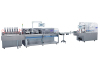
An automatic cartoning machine is a secondary packaging machine that automatically packs products into cartons. It completes multiple processes, including carton opening, product loading, carton closing, and final carton output.
Compared with manual packaging, automatic cartoning machines provide higher production speed, better packaging consistency, and improved product protection.
Working Principle of an Automatic Cartoning Machine
Although different cartoning machines may have different designs, most automatic cartoning machines operate through several key steps.
1. Automatic Carton Feeding
The packaging process starts with carton feeding.
Flat cartons are stored in the carton magazine of the machine. The carton feeding mechanism automatically picks up individual cartons and transfers them to the forming section.
A precise carton feeding system ensures that each carton is supplied smoothly, reducing carton jams and production interruptions.
2. Carton Opening and Forming
After feeding, the flat carton is opened and formed into a three-dimensional box shape.
The machine uses mechanical components or vacuum systems to open the carton accurately and prepare it for product loading.
Stable carton forming is essential because poorly opened cartons may affect the following packaging steps.
3. Product Feeding and Loading
Once the carton is ready, the product feeding system transfers products into the carton.
Depending on the product type, different feeding methods can be applied, such as:
-
Blister pack feeding
-
Bottle feeding
-
Tube feeding
-
Sachet and pouch feeding
-
Manual product loading
For pharmaceutical and cosmetic industries, automatic feeding systems can be integrated with upstream machines to achieve a fully automated packaging line.
4. Leaflet Inserting (Optional)
For industries such as pharmaceuticals, instruction leaflet insertion is often required.
The automatic cartoning machine can fold and insert leaflets into cartons together with the products, ensuring accurate placement and improving packaging efficiency.
5. Carton Closing and Sealing
After the product is placed inside, the carton is closed and sealed.
Depending on customer requirements, different sealing methods can be used:
-
Tuck-in carton closing
-
Glue sealing
-
Hot melt adhesive sealing
The sealing process ensures that products remain secure during transportation and storage.
6. Finished Carton Output
The completed cartons are discharged from the machine and can be connected with downstream equipment, such as:
-
Carton checkweighers
-
Labeling machines
-
Case packing machines
-
Palletizing systems
This allows manufacturers to create a complete automatic packaging line.
Main Components of an Automatic Cartoning Machine
A typical automatic cartoning machine consists of several important systems:
Carton Magazine
Stores flat cartons and supplies them automatically.
Product Feeding System
Transfers products into cartons accurately.
Carton Forming System
Opens and shapes cartons before filling.
Control System
Usually equipped with PLC and HMI, allowing operators to monitor and adjust machine parameters easily.
Drive System
Modern machines often use servo motors to improve positioning accuracy and operational stability.
Benefits of Using an Automatic Cartoning Machine
Higher Production Efficiency
Automatic cartoning machines can continuously perform packaging operations, significantly increasing output compared with manual packaging.
Reduced Labor Cost
Automation reduces dependence on manual workers and allows operators to focus on machine monitoring and production management.
Improved Packaging Quality
Precise control systems ensure consistent carton appearance and product placement.
Flexible Packaging Solutions
Machines can be customized according to different product sizes, carton dimensions, and production requirements.
Applications of Automatic Cartoning Machines
Automatic cartoning machines are commonly used for:
-
Pharmaceutical packaging
-
Cosmetic packaging
-
Food packaging
-
Healthcare products
-
Personal care products
-
Daily chemical products
They are especially suitable for products requiring reliable, hygienic, and efficient secondary packaging.
Choosing the Right Automatic Cartoning Machine
When selecting a cartoning machine, manufacturers should consider:
-
Product size and shape
-
Required production speed
-
Carton dimensions
-
Packaging method
-
Integration requirements
-
Industry standards
A professional packaging machinery manufacturer can provide customized solutions based on actual production needs.
Improve Your Packaging Efficiency with Our Automatic Cartoning Solutions
With years of experience in packaging machinery manufacturing, we provide reliable automatic cartoning machines designed for different industries and applications.
Our engineering team can help customers select the most suitable packaging solution, from standard cartoning machines to customized automatic packaging lines.
Contact us today to discuss your product requirements and find the right cartoning solution for your production.

Recent Posts

October 26, 2016
The Most Successful Engineering Contractor



Aug 14, 2026
How to Choose an Automatic Cartoning MachineContact US
Product Information
Quantity
Unit
Piece
Support order samples, customization, wholesale direct, and complete payment. If the product you look for does not have corresponding customized content, pls fill out the form below to contact us, and we will reply ASAP.